
Chimney Cap Installation in Bergen County, NJ
Stainless and copper chimney cap installation and replacement to keep rain, debris, birds and squirrels out of the flue while preserving draft.
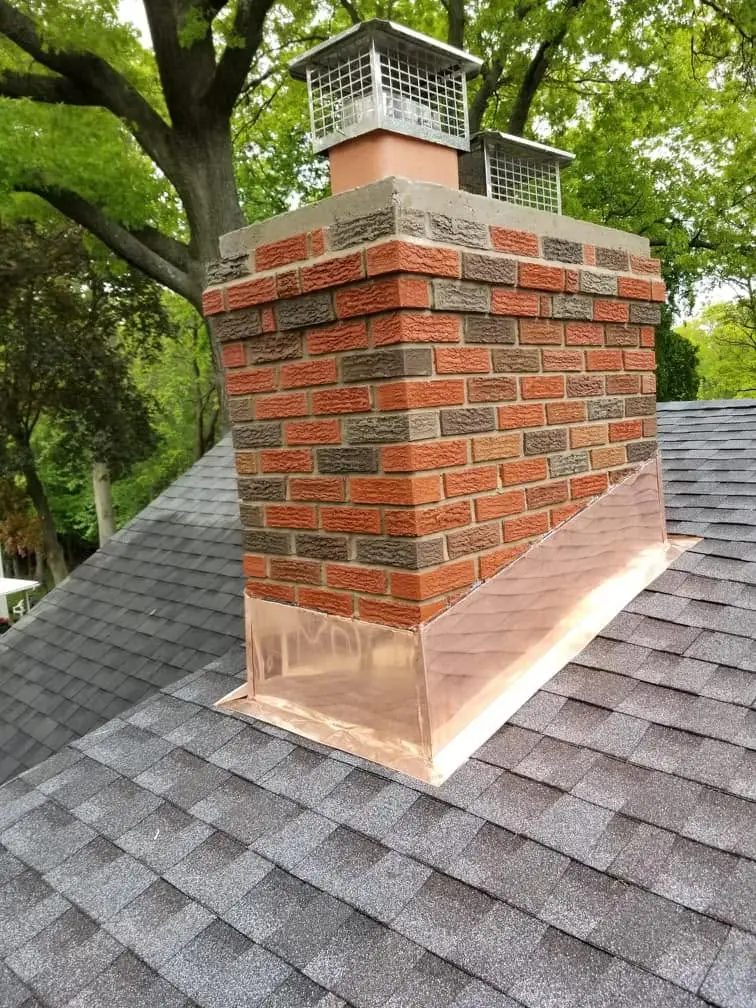
A missing cap is the cheapest serious problem on a chimney: rain falls straight down the flue, rusting dampers and soaking the smoke chamber.
This is one part of the chimney work we do across Bergen and Passaic County. Every job is quoted in writing after a hands-on inspection, performed by our own crew rather than subcontractors, and backed by our satisfaction guarantee. We are licensed under NJ HIC #13VH13359900 and fully insured.
What the work includes
- Single-flue and multi-flue custom caps
- Stainless and copper, with spark screen
- Animal exclusion and nest removal
- Bolt-on and slip-fit mounting
Cap or crown: why homeowners mix up two different parts
The crown is the sloped concrete surface at the top of the masonry stack that sheds water off the brick; the cap is the separate metal cover mounted over the flue opening itself. They sit right next to each other and both protect against water, which is why the two get confused — but a missing cap and a cracked crown are two different repairs with two different fixes.
A homeowner who says “my chimney cap is cracked” is often describing the crown, and one who says “my crown is rusting” is usually describing the cap — the terms get swapped constantly in casual conversation. The distinction matters for diagnosis: a failed crown is a masonry repair covered on our chimney repair page, while a missing, undersized or rusted-through cap is what this page covers. Many chimneys need both crown work and a new cap at the same time, since a missing cap lets rain fall directly onto and pool on the crown below it, accelerating whatever crown damage is already underway.
What a missing or failed cap actually lets into the flue
An uncapped flue is a direct opening straight down into the house, and it invites more than rain. Wildlife extension research identifies chimneys as a common entry point for raccoons and other animals seeking a den site, and a cap constructed of sheet metal with heavy screen mesh is the standard method for excluding them, alongside its role keeping out rain, leaves and debris.
What we find in an uncapped or poorly capped flue over the years is fairly consistent:
- Water falling straight down the flue, rusting a damper, soaking a firebox, or feeding the freeze-thaw cycle that damages masonry below it.
- Animals. Cornell Cooperative Extension’s wildlife damage guidance notes that raccoons in particular will take up residence in an open chimney, and recommends a commercial cap of sheet metal and heavy screen as the standard prevention method. Birds and squirrels cause the same problem on a smaller scale.
- Debris and downdraft. Leaves and twigs collect in an open or poorly capped flue, and an exposed opening is also more prone to wind-driven downdraft pushing smoke back into the house during a fire.
Once an animal has taken up residence, the flue needs to be confirmed clear before it gets capped — sealing a chimney with something living in it is its own problem.
Spark arrestor mesh: why the screen size is not arbitrary
The mesh on a cap’s spark screen has to be small enough to stop embers from a wood fire escaping onto the roof, but large enough that it does not choke draft or clog with creosote and debris. National fire code guidance calls for mesh openings in a narrow range and for the arrestor to have enough total open area, made of corrosion-resistant material, to avoid restricting the flue’s performance.
Chimney fires are not a rare hazard on this page’s topic list — national fire data shows confined chimney and flue fires make up the large majority of residential heating fires, and a spark arrestor is one of the passive defenses against a fire spreading past the flue opening. Building and fire code guidance for chimney caps and spark arresters calls for mesh openings sized to trap embers without excessively restricting draft, constructed of heat- and corrosion-resistant material, with total open screen area well in excess of the flue’s own cross-section so exhaust flow is not choked. A cap with the wrong mesh — too fine, clogged, or undersized for the flue — can reduce draft enough to cause smoke spillage, which is the opposite of what the cap is there to prevent.
Cap materials: what actually holds up in North Jersey weather
Galvanized steel caps are the least expensive option but corrode fastest under repeated freeze-thaw and salt-air conditions, often within a handful of years. Stainless steel and copper both resist corrosion far longer, with copper developing a protective patina over time rather than rusting, which is why we install stainless or copper rather than galvanized on most jobs.
| Material | Corrosion resistance | Typical appearance over time |
|---|---|---|
| Galvanized steel | Lowest — coating wears through and rust follows | Rust staining down the chimney face within a few years |
| Stainless steel | High — resists rust through repeated wet/freeze cycling | Stays consistent with minimal staining |
| Copper | High — does not rust; forms a protective patina | Bright copper weathering to a dull brown, then green over years |
Cap material is one of the few places where paying more up front clearly reduces the number of times you replace it. A galvanized cap that starts rusting within a few winters is a false economy compared to stainless or copper installed once and left alone.
Single-flue, multi-flue and custom cap configurations
A single flue gets a single cap sized to that opening, but a chimney venting more than one appliance or fireplace through separate flues in the same masonry stack needs either individual caps per flue or a custom multi-flue cap that covers the whole top while still isolating each flue’s draft. Sizing and configuration both affect how well the finished chimney performs.
Multi-flue chimneys are common on older Bergen and Passaic County homes that vent a fireplace and a furnace or water heater through separate flues sharing one masonry chase. A single continuous cap across both openings needs to be built so each flue still draws independently — a poorly designed multi-flue cap can cause one flue to interfere with the draft of the other. We measure each flue individually and fabricate or select a cap configuration that keeps the venting for each appliance separate.
Signs a cap needs replacing, and how installation works
Visible rust streaking down the chimney face, a cap that has come loose or blown off in a storm, missing or torn spark screen mesh, or an animal that has gained entry all point to a cap that needs replacement rather than repair. Installation itself is typically a same-day job once the correct size and mounting style are confirmed.
We measure the flue opening, confirm single or multi-flue configuration, and either bolt or slip-fit the new cap depending on what the existing chimney can support — bolt-on mounts are more secure against wind and animal tampering than slip-fit designs that sit loose inside the flue tile. See our chase cover installation page if your chimney is a framed, sided chase rather than traditional masonry, since that calls for a different top treatment than a cap. For the full picture of chimney services, visit our chimney repair, rebuilds and cleaning overview, or serving Hackensack and Clifton homeowners directly, contact us for a free written estimate.
Related chimney services
Full flue cleaning and creosote removal with drop-cloth protection and vacuum containment, plus …
Partial and full chimney rebuilds — taking the stack down to sound masonry and rebuilding with m…
Stainless steel liner installation for fireplaces, furnaces, boilers and water heaters, sized to…
Targeted chimney repair — repointing failed joints, replacing spalled brick, rebuilding a cracke…
Replacement of rusted chase covers on framed chimney chases with stainless or copper covers, cro…
Chimney Cap Installation service areas
We provide chimney cap installation from our Totowa base across these towns. Each link opens that town’s page, with local permit and building notes.
Bergen County: Allendale · Bergenfield · Cliffside Park · Demarest · Elmwood Park · Emerson · Englewood · Fair Lawn · Fairview · Fort Lee · Franklin Lakes · Garfield · Glen Rock · Hackensack · Harrington Park · Hasbrouck Heights · Hillsdale · Lodi · Mahwah · Montvale · Old Tappan · Oradell · Palisades Park · Paramus · Park Ridge · Ramsey · Ridgefield Park · Ridgewood · Rochelle Park · Rutherford · Teaneck · Tenafly · Waldwick · Westwood · Woodcliff Lake · Wyckoff
Passaic County: Clifton · Haledon · Hawthorne · Little Falls · Paterson · Totowa · Wayne · West Milford
Essex County: Montclair · Nutley · Verona
Hudson County: Jersey City · Secaucus
Morris County: Morristown · Parsippany
Union County: Summit
Rockland County, NY: Suffern, NY
Not listed? Call (862) 271-1225 and ask whether we cover your address.
Where we work: from our Totowa base across North Jersey
Frequently asked questions
Why is my chimney cap rusting?
Galvanized caps corrode within a few seasons in New Jersey weather. Stainless or copper is the right long-term choice.
Will a cap hurt my draft?
A properly sized cap does not. Undersized screens and clogged mesh do — which is why the screen area has to match the flue.
Does every fireplace or furnace chimney need a cap?
Yes, in practically every case. An uncapped flue is exposed to rain, debris and animal entry with nothing protecting it, regardless of what fuel or appliance the chimney vents. The only situations where a cap is skipped involve unusual venting configurations specified by an appliance manufacturer, which we would flag during inspection rather than assume.
Can installing a chimney cap cause smoke to back up into my house?
A properly sized cap with adequate mesh open area should not reduce draft enough to cause backup. An undersized cap, a mesh screen clogged with creosote or debris, or a cap installed on a flue that already had a marginal draft before the cap went on can cause spillage — which is why sizing the cap to the flue, not just bolting on whatever fits, matters.
What's the difference between a chimney cap and a chase cover?
A cap sits directly over an individual masonry flue opening. A chase cover is the larger metal pan that sits over the entire top of a framed, sided chimney chase housing a factory-built metal flue, sealing the whole top rather than one flue opening. Many homes with a masonry chimney need only a cap; homes with a framed chase need a chase cover instead.
How often should a chimney cap be checked?
Once a year, as part of the same annual chimney inspection that covers the flue, crown and firebox. A cap can fail quietly — mesh corrodes, a mounting bolt works loose in wind, or an animal partially dislodges it — without being obvious from the ground, so it is worth confirming during the routine visit rather than only after a problem shows up.
- Raccoons (Wildlife Damage Management Fact Sheet Series) — Cornell Cooperative Extension
- Caps and Spark Arresters for Chimneys and Vents — UpCodes
- Heating Fires in Residential Buildings (2017-2019) — U.S. Fire Administration
Updated September 2026 · Reviewed by Edgar Lopez Gonzalez, owner · NJ HIC #13VH13359900
Licensed & insured. 25+ years in North Jersey. We answer 24/7 for leaks and storm damage.
- Service
- Chimney Cap Installation
- Category
- Chimney
- Service area
- Bergen & Passaic County and surrounding North Jersey
- License
- NJ HIC #13VH13359900