
Home › Areas We Serve › Ocean County
Roofing, Chimney, Masonry & Exterior Contractor in Ocean County, NJ
NJ Gold Star Construction takes on roofing, chimney, masonry steps and stone walls, poured concrete sidewalks, gutter, siding and deck projects in Ocean County, NJ. We work from Totowa rather than a local office, are licensed (NJ HIC #13VH13359900) and insured, and give free written estimates.
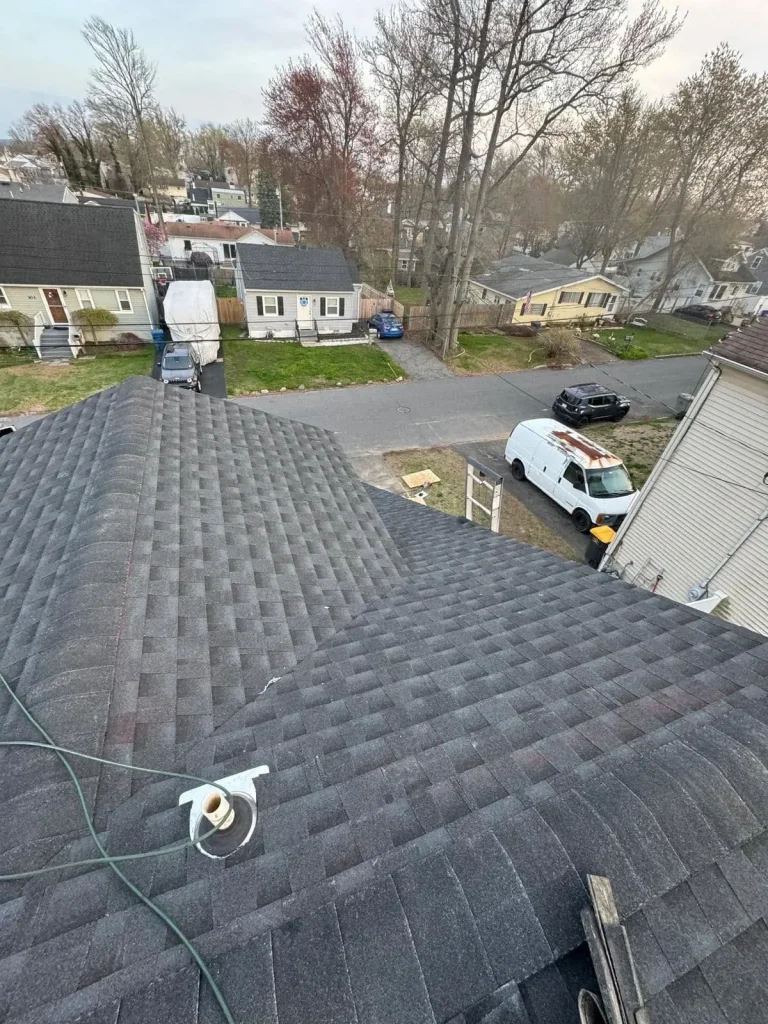
Ocean County is outside our home area of Bergen and Passaic, and we are straightforward about that: we work from Totowa, so we take on Ocean County projects that justify the trip rather than quick one-off calls.
The pages below cover what we do there, what the shore climate means for exteriors, and how to find out whether your project is a fit.
How NJ Gold Star works in Ocean County from Totowa
NJ Gold Star Construction works from Totowa and has no Ocean County office, so we take on Ocean County roofing, chimney, masonry, gutter, siding and deck projects that justify the drive. The way to find out whether your project is a fit is to call or text (862) 271-1225, or send the contact form.
Ocean County sits well outside our home area of Bergen and Passaic County, and the drive from Totowa is long. That shapes what we say yes to. A full roof replacement, a chimney rebuild, a stone wall, a set of masonry steps or a new deck keeps a crew busy for days, so the travel makes sense. A single missing shingle or a quick gutter reattachment usually does not, and a roofer or handyman near you will serve you better.
When you reach out, tell us the town, the type of work, roughly how big it is, and whether water is coming in. We will say plainly whether we can take it on, and if we can, we schedule a free written estimate with an on-site inspection like any other job. Our own crew does the work, with no subcontractor handoff, and the same NJ HIC registration applies on every project. For jobs in our core territory, see the Bergen County and Morris County pages, or the full list of areas we serve.
What salt air, wind and nor'easters do to a shore home's exterior
Shore exteriors fail differently from inland ones. Salt spray speeds up corrosion of metal fasteners and flashing, onshore winds carry that salt and moisture inland, and coastal storms strike mostly between October and April. Ocean County roofs, gutters and siding need corrosion-resistant metals and careful fastening.
The Office of the New Jersey State Climatologist at Rutgers notes that coastal storms, often called nor’easters, are most frequent between October and April, and that tropical storms and hurricanes are a special concern along the coast. It also reports that sea breezes often reach 5 to 10 miles inland. Salt travels with that air.
FEMA’s technical bulletin on coastal corrosion explains that salt spray from breaking waves and onshore winds significantly accelerates the corrosion of metal connectors and fasteners, and that the amount of salt in the air declines rapidly in the first 300 to 3,000 feet landward of the shoreline. It also says accelerated corrosion has been measured as far inland as 5 to 10 miles. The bulletin points to stainless steel and thick hot-dip galvanized metal as the better choices.
Where this shows up on a house
- Roof fasteners and flashing: a nail that rusts through loses its grip, and shingles lift in the next blow.
- Gutter hangers and screws: mixed metals in contact corrode faster in damp, salty air.
- Siding trim and fasteners: staining and rust streaks usually trace to the nail, not the panel.
- Chimney caps and chase covers: exposed sheet metal is the first thing to go.
We do not claim a house is safe from the shore because it is a few miles back. We look at the actual metal on your roof during the estimate.
Which of our six trades matter most at the shore
Roofing, chimney work, masonry, gutters, siding and decks all apply in Ocean County, but roof replacement, chimney rebuilds, stone and masonry work, and new or rebuilt decks are the projects we most often travel for. Each one faces wind, moisture or salt exposure that inland homes see less of.
| Trade | Why it matters at the shore | Start here |
|---|---|---|
| Roofing | Wind uplift, corroding fasteners and flashing, and nor’easter driven rain | Roofing contractors |
| Chimney | Exposed caps, crowns and flashing take salt and wind first | Chimney repair and rebuilds |
| Masonry | Steps, stone walls and sidewalks handle moisture and de-icing salt | Masonry services |
| Gutters | Wind-driven rain and storm debris overload the system | Seamless gutters |
| Siding | Flashing and fasteners behind the panels decide how it ages | Siding repair and installation |
| Decks | Footings, ledger flashing and fasteners in humid, salty air | Deck builders |
Within roofing, a full roof replacement is where fastener and flashing choices pay off most, and attic ventilation matters because shore humidity lingers in the attic. For masonry-chimney work, a chimney rebuild or new chimney cap is a common reason to make the trip. For a new structure, see new deck construction.
Small, one-off repairs are the jobs we are least likely to travel for, and we say so up front.
Roofing materials and fasteners for coastal wind and salt
For a shore roof, the fasteners matter as much as the shingles. The Department of Energy’s Building America Solution Center says each shingle strip should have six nails in high-wind areas, and IBHS Fortified calls for hot-dip galvanized or stainless steel fasteners within 3,000 feet of salt or brackish water.
The same guide, written by Pacific Northwest National Laboratory, adds that nails belong in the shingle’s nailing zone, neither over-driven nor under-driven, and that staples should not be used. It notes that codes set a minimum of four fasteners per strip shingle and that the manufacturer’s instructions govern the actual count. Those are the details we ask about on any shore job.
What this changes in a shore estimate
- Nail pattern and metal: a written scope should say how many nails per shingle and what they are made of.
- Starter and edge details: eaves, rakes, hips and ridges are where wind gets under shingles first, so drip edge and sealing at those points deserve attention.
- Flashing metal: match it to the fasteners so dissimilar metals do not corrode each other.
- Ventilation: balanced intake and exhaust keep humid air moving out of the attic.
Our roof repair work starts with the same questions. If you are comparing materials, our guide to roofing materials for New Jersey homes covers the options. The IBHS Fortified program is a voluntary standard, and we do not hold any Fortified designation, so treat it as a benchmark for questions, not a promise from us.
Flood zones, elevation rules and what they mean for decks and masonry
If a shore property sits in a mapped flood zone, repair or improvement costs can trigger floodplain rules. FEMA’s 50 percent rule says that when improvements or repair costs exceed 50 percent of a building’s market value, the building must be brought up to current floodplain management standards. The town’s floodplain administrator makes that call.
FEMA defines the base flood elevation as the water surface elevation of a flood with a 1 percent chance of being equaled or exceeded in a given year, shown on flood insurance rate maps. FEMA’s floodplain training material describes the rule this way: if the cost of improvements or of repairing damage exceeds 50 percent of market value, an existing building must meet the requirements for new construction. The official responsible for a community’s floodplain regulations makes those determinations, and a community can set a stricter threshold than 50 percent.
Why a contractor should ask about it
- A large addition, a roof-plus-siding-plus-deck package, or storm repair on a flood-zone home may be added together when the town reviews cost.
- Footings, posts and anything below the design flood elevation may be treated differently from the same work inland.
- Masonry at low elevations, including masonry steps, poured concrete sidewalks and foundation repair, is the type of work a floodplain administrator may look at closely.
We cannot tell you your flood zone from a distance, and we are not engineers. Your municipal construction office or floodplain administrator can say what applies to your parcel before you spend money. Ask them first, then call us with their answer.
How permits work across Ocean County's municipalities
Ocean County has no single permit office. Each municipality’s construction office issues permits under the New Jersey Uniform Construction Code, which the state Department of Community Affairs oversees. Contractors must be registered Home Improvement Contractors for a town to issue them a permit.
The DCA’s Municipal Procedures Manual describes the Construction Official as the head of each town’s enforcing agency, with a technical assistant handling applications. It divides work into major work and minor work, and says minor work, which is defined in the state code, does not require prior approvals or plan review, though the code enforcement office must still be notified before work begins. Whether a roof, siding, deck or masonry project counts as minor work is decided under the code and by the office that receives your application, so ask the municipality.
The state’s consumer brief on hiring contractors adds that a contractor who is not registered cannot obtain municipal construction permits, and that you should make sure all applicable permits are pulled. On our projects we confirm the permit path with the town before the work starts and list it in the written scope.
Coastal rules are a separate question
Some shore properties may also fall under New Jersey Department of Environmental Protection coastal rules, such as the Coastal Area Facility Review Act. FEMA’s regional summary describes that regulated area as running from the mean high water line inland to an irregular boundary that follows public roads and other features, so a parcel’s position can be hard to judge by eye. Check whether your property falls under NJDEP coastal rules before you plan exterior work near a beach, dune or tidal shoreline, and ask your town’s construction office where to start.
De-icing salt, bayside moisture and masonry
Masonry near the water takes salt and moisture from two directions: wind-borne salt air and the de-icing salt used on winter walks and steps. Both work into brick, stone and mortar joints. Repointing, solid footings, drainage and well-built stone walls and steps hold up better than quick patching.
Water gets into masonry and then freezes. The Rutgers state climatologist’s office reports that the seacoast averages 217 freeze-free days, which is long, but winter storms and cold snaps still bring freeze-thaw cycles, and salt in the water speeds the damage to mortar and soft brick. The physical result is familiar: crumbling joints, spalling faces, and steps that settle where drainage was never right.
Where we can help most is with built work that handles water properly:
- Natural stone walls, retaining or garden walls, built with drainage and a stable base so water does not push them out.
- Masonry steps and stoops with sound footings, a pitch that sheds water and treads that stay safe in the cold.
- Poured concrete patios and walks with joints and a base planned for moisture.
If you use de-icing products, ask the manufacturer what is safe on your material. Fresh concrete in particular should be protected through its first winter. We will walk through what we see at the estimate.
Timing a project for a shore home and choosing a contractor
The best time for exterior work on a shore home is outside the October to April coastal storm season, when the weather window is steadier. For any contractor, confirm New Jersey Home Improvement Contractor registration with the Division of Consumer Affairs, ask about insurance, and get everything in a written contract.
Because the State Climatologist’s office reports that nor’easters are most frequent from October to April, spring through early fall gives roofing, siding and masonry crews the most dependable weather. If a leak or storm damage cannot wait, temporary protection comes first and permanent work follows when conditions allow. If the house is a second home or has tenants, tell us your constraints and we will plan the schedule around them.
Vetting any contractor in Ocean County
- Registration: New Jersey law requires home improvement contractors to register with the Division of Consumer Affairs. Ask for the number and confirm it with Consumer Affairs at 1-800-242-5846.
- Insurance: the state brief notes liability insurance is required by law, so ask for proof.
- Contract: projects over $500 need a written contract, and you can cancel before midnight of the third business day after receiving a copy.
- Deposit: the brief warns about contractors who ask for more than a third of the total up front.
Our guide to choosing a roofing contractor in New Jersey goes into more detail. We are registered as NJ HIC #13VH13359900. When you are ready, send us the details of your project.
Exterior services in Ocean County
Roof repair, full replacement, attic ventilation and maintenance, with 24/7 emergency leak response.…
Repairs, rebuilds, stainless liners, caps, chase covers and deep cleaning.…
Masonry steps, poured concrete sidewalks, natural stone walls, stone veneer and foundation repair.…
Seamless gutters, guards, screens, repairs and cleaning.…
Vinyl and fiber cement siding, installed and repaired with the flashing behind it done right.…
New decks and structural repair, built to code on proper footings.…
Recent projects
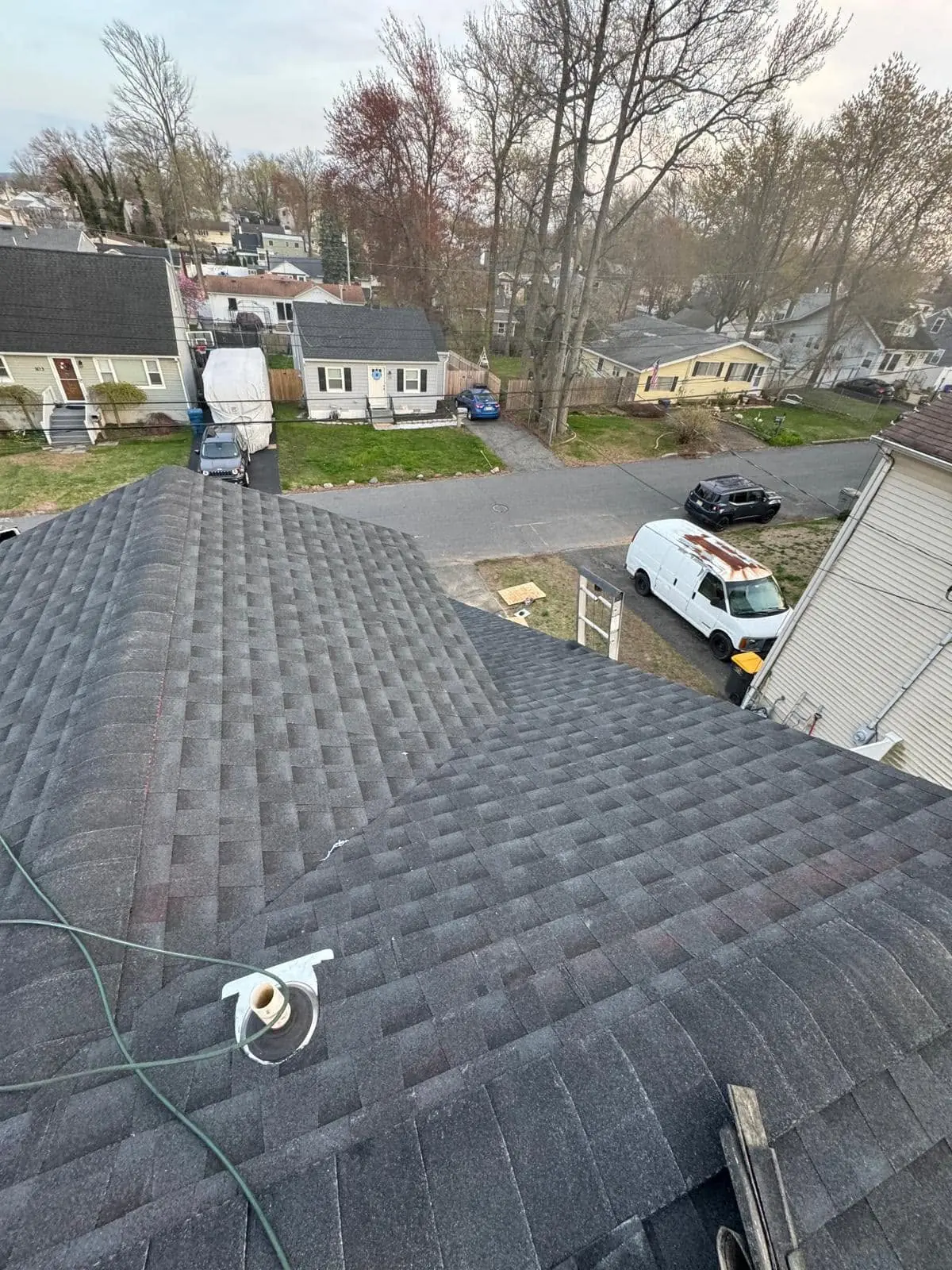

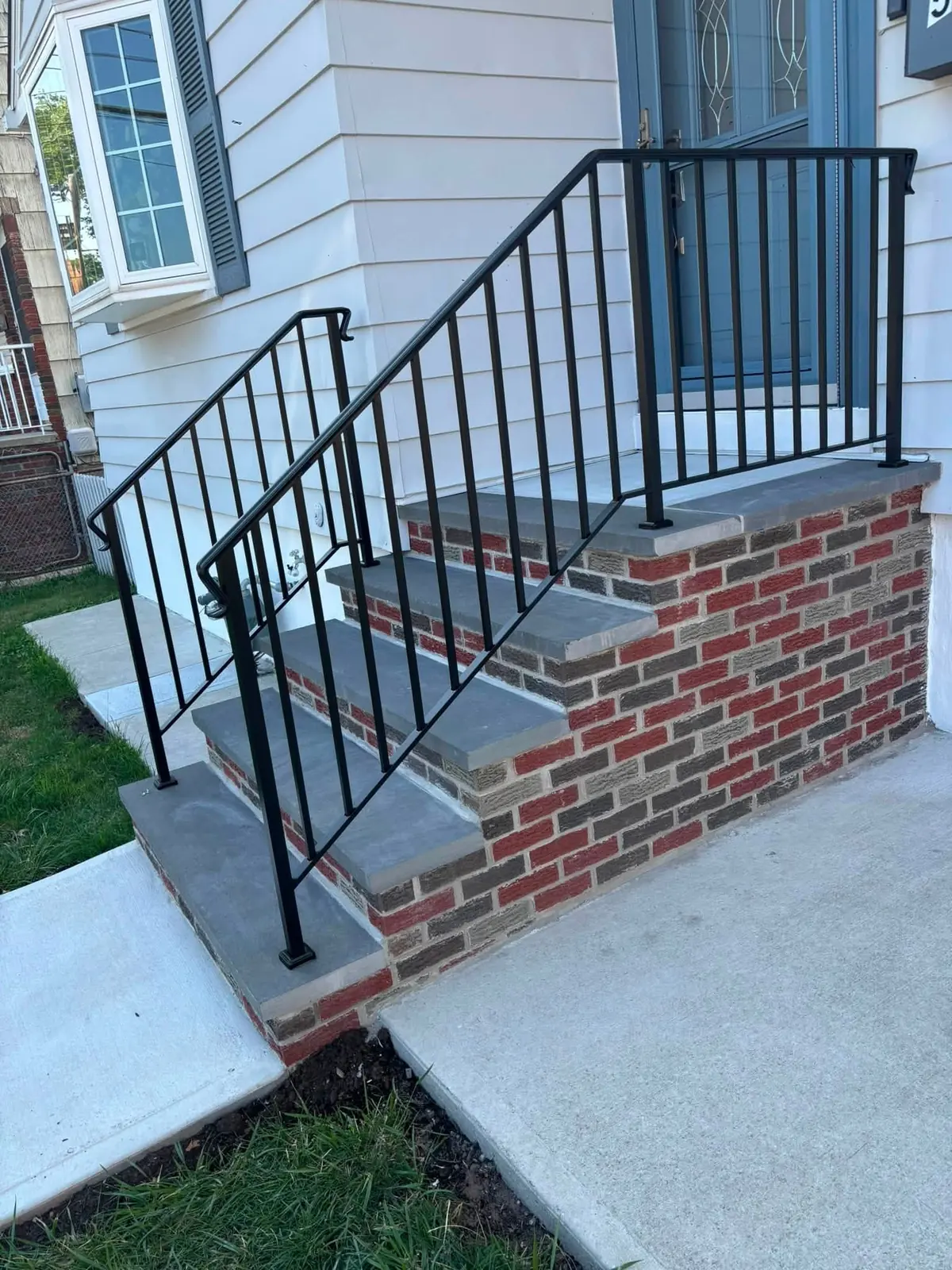
Ocean County service area map
Request a free estimate
Tell us about the project and we will call or text you back. For an active leak call (862) 271-1225 now.
Frequently asked questions
Do you have an office in Ocean County?
No. NJ Gold Star Construction works from Totowa and does not have an Ocean County office or yard. We take on Ocean County roofing, chimney, masonry, gutter, siding and deck projects that justify the drive. Call or text (862) 271-1225 or use the contact form and we will tell you plainly whether your project is a fit.
Can you respond to an Ocean County roof leak right away?
We answer calls and texts around the clock for leaks and storm damage, but we do not promise same-day arrival in Ocean County, because of the distance from Totowa. When you call, tell us your town and what is leaking and we will discuss what is possible, including practical steps to limit water damage until a crew can get there.
Which Ocean County projects are worth your travel?
Jobs that keep a crew busy for several days are the usual fit: full roof replacements, chimney rebuilds, natural stone walls, masonry steps, poured concrete sidewalks and patios, and new or rebuilt decks. Small one-visit repairs generally are not, and a contractor close to you will usually serve those better and faster.
Do I need a permit for exterior work at the Jersey Shore?
Often yes. Construction permits come from your municipality’s construction office under the New Jersey Uniform Construction Code, and the town decides what counts as minor work. Some waterfront properties may also fall under NJDEP coastal rules. A registered contractor can apply, but you should confirm the requirements with your town first.
Does salt air really shorten the life of a roof or gutters?
It mainly attacks the metal. FEMA’s coastal corrosion guidance says salt spray significantly accelerates the corrosion of metal fasteners and connectors, with accelerated rates measured up to 5 to 10 miles inland. Choosing stainless steel or hot-dip galvanized fasteners and matching metals for flashing and hangers helps slow that damage.
What if my Ocean County home is in a flood zone?
Flood-zone status can change what is allowed. Under FEMA’s 50 percent rule, improvements or repairs costing more than half of the building’s market value can require the building to meet current floodplain standards. Ask your town’s floodplain administrator what applies to your parcel before planning large or combined projects, then bring that answer to your estimate.
- Overview of the Climate of New Jersey — Office of the New Jersey State Climatologist, Rutgers University
- NFIP Technical Bulletin 8: Corrosion Protection for Metal Connectors in Coastal Areas — FEMA
- Asphalt Shingle Roofs — U.S. Department of Energy, Building America Solution Center (PNNL)
- Substantial Improvement and Substantial Damage (NFIP Floodplain Management course, Unit 8) — FEMA
- Base Flood Elevation — FEMA
- New Jersey Uniform Construction Code Municipal Procedures Manual — New Jersey Department of Community Affairs, Division of Codes and Standards
- Hiring Home Improvement Contractors (consumer brief) — New Jersey Division of Consumer Affairs
- New Jersey Coastal Areas and CAFRA (regional risk note) — FEMA Region II
Updated October 2026 · Reviewed by Edgar Lopez Gonzalez, owner · NJ HIC #13VH13359900
Licensed & insured. 25+ years in North Jersey. We answer 24/7 for leaks and storm damage.
- County
- Ocean County, NJ
- License
- NJ HIC #13VH13359900
- Emergency service
- 24/7 — call (862) 271-1225
- Estimates
- Free, written and itemized